Thomas
the one called Didymus
Who was Thomas?
- He was called Didymus, which means “twin.” John 11:16
- He did not believe that Jesus had risen until he saw him. John 20:24-25
- When he saw him, he said, “My Lord and my God!” John 20:28
- The name
- Thomas comes from an Aramaic word that means “twin.” Didymus means the same in Greek. NABRE note on Jn 11, 16; Benedict XVI, general audience of September 27, 2006
- Also called
- Didymus, which means “twin” John 11:16; John 20:24; John 21:2
- Feast day
- July 3: Saint Thomas, Apostle
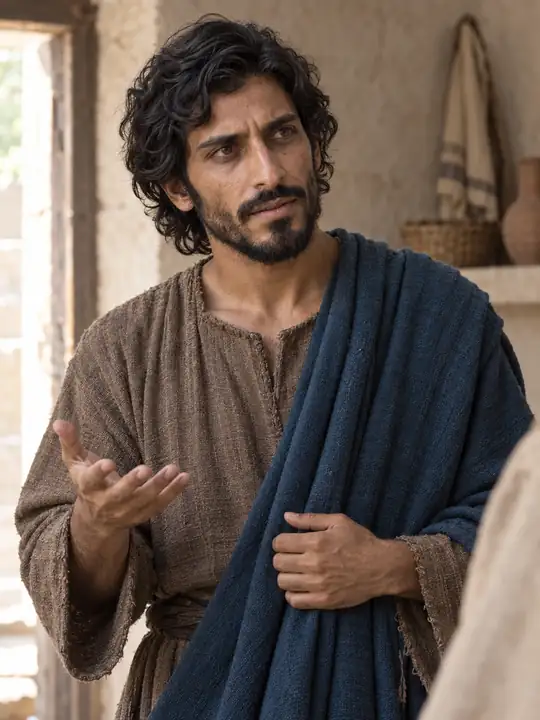
What the Bible says
John 11:16
Thomas therefore, who is called Didymus, said to his fellow disciples: Let us also go, that we may die with him.
John 20:24-25
24Now Thomas, one of the twelve, who is called Didymus, was not with them when Jesus came. 25The other disciples therefore said to him: We have seen the Lord. But he said to them: Except I shall see in his hands the print of the nails, and put my finger into the place of the nails, and put my hand into his side, I will not believe.
John 20:28
Thomas answered, and said to him: My Lord, and my God.
Douay-Rheims Bible (Challoner revision), public domain.
The path of Thomas
- With Jesus. He was one of the Twelve whom Jesus chose. Luke 6:13-15
- With Jesus. Jesus wanted to go back to Judea, where people had recently tried to stone him. Thomas told the others to go too, and die with Jesus. John 11:7-8, 16
- With Jesus. At the Last Supper, he told Jesus that they did not know where he was going. Jesus answered that he is the way. John 14:5-6
- Afterward. He was not there when the risen Jesus appeared to the disciples. Thomas said he would not believe unless he saw and touched the wounds of Jesus. John 20:24-25
- Afterward. Eight days later, Jesus came back and invited Thomas to touch him. Thomas called him “My Lord and my God.” John 20:26-28
- Afterward. He was with Peter and other disciples at the Sea of Tiberias when Jesus appeared to them again. John 21:1-2
- Afterward. After the Ascension, he was in Jerusalem with the other apostles, praying with Mary. Acts 1:13-14
- Afterward. According to Tradition: According to tradition, he preached in Parthia and Persia, and later in India, where he died a martyr. Eusebius, Church History III, 1 (quoting Origen); Benedict XVI, general audience of September 27, 2006; Paul VI, letter “Quemadmodum traditio,” March 18, 1972
Words of Thomas
“Let us also go, that we may die with him.” John 11:16
When Jesus decided to go back to Judea, where people had tried to stone him a short time before.
“Lord, we know not whither thou goest; and how can we know the way?” John 14:5
At the Last Supper, when Jesus told them that they knew the way to where he was going.
“Except I shall see in his hands the print of the nails, and put my finger into the place of the nails, and put my hand into his side, I will not believe.” John 20:25
When the other disciples told him they had seen the Lord.
“My Lord, and my God.” John 20:28
Eight days later, when the risen Jesus invited him to touch his hands and his side.
What they were like
- Determined: Jesus wanted to go back to Judea, where he was in danger. Thomas told the others to go and die with Jesus. John 11:8, 16
- He said what he did not understand: at the Last Supper, he told Jesus they did not know where he was going. John 14:4-5
- He wanted proof: he said he would not believe unless he saw and touched the wounds of Jesus. John 20:25
The greatest thing they did
- He called Jesus “My Lord and my God.” Benedict XVI called those words the most splendid profession of faith in the New Testament. John 20:28; Benedict XVI, general audience of September 27, 2006
Not to be confused with
- Thomas Aquinas was a great theologian of the Middle Ages, more than a thousand years later. The apostle knew Jesus in person. Benedict XVI, general audience of September 27, 2006
In the Church today
Feast day: July 3, Saint Thomas, Apostle (feast). General Roman Calendar
In art, recognized by: A spear, from the account of his martyrdom Catholic Encyclopedia (1907), “Apostle Spoons”; Catholic Encyclopedia (1912), “St. Thomas the Apostle”
Thomas in art


What people ask
Why is Thomas called “Doubting Thomas”?
Because he did not believe that Jesus had risen until he saw him. Jesus told him not to be unbelieving, but to believe. John 20:25-27
What does Didymus mean?
It is a Greek word that means “twin.” The Bible does not say why they called him that. John 11:16; NABRE note on Jn 11, 16
Did Thomas put his finger into the wounds of Jesus?
The Gospel does not say. It tells that Jesus invited him to do it, and that Thomas called him “My Lord and my God.” John 20:27-28
Where did Saint Thomas preach?
The Bible does not say. According to tradition, in Parthia and Persia, and later in India, where he died a martyr. Eusebius, Church History III, 1; Benedict XVI, general audience of September 27, 2006
Did Thomas write the Gospel of Thomas?
No. That writing and the “Acts of Thomas” were written later under his name. They are apocryphal: they are not in the Bible. Benedict XVI, general audience of September 27, 2006
His doubt He did not believe the other disciples when they told him they had seen the Lord. John 20:24-25 Jesus told Thomas that he believed because he had seen,…
The rest of this page (daily life, failings, little-known facts, for you…) is part of the subscription.
See the mapWho Thomas is connected to
- Jesus · recognized him
More people
All the people of the Bible · The Twelve Apostles · Women of the Bible