Hannah
the one who prayed in silence
Who was Hannah?
- Wife of Elkanah, from Ramah. She had no children, and she wept over it. 1 Samuel 1:1-2, 7
- At the sanctuary of Shiloh she asked the Lord for a son, and promised to give him back to the Lord. 1 Samuel 1:9-11
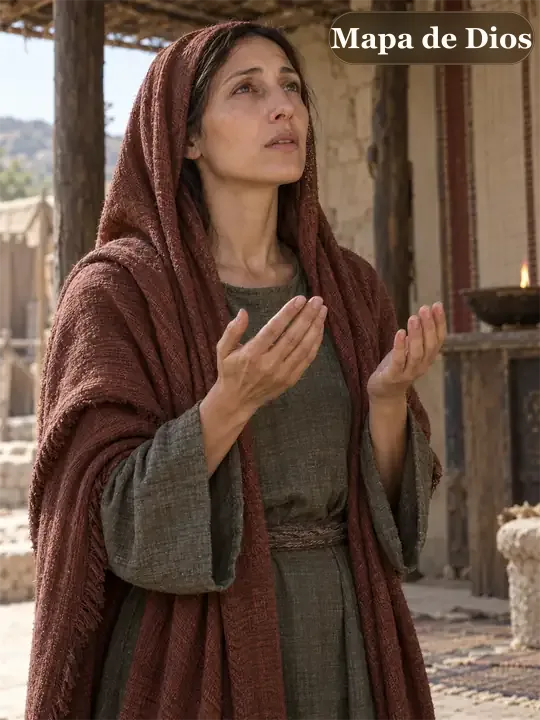
- God gave her Samuel. Hannah brought him to the sanctuary and sang to the Lord. 1 Samuel 1:20, 24-28; 1 Samuel 2:1
- The name
- Hannah comes from a Hebrew word that means “grace.” Catholic Encyclopedia (1913), “Anna”
- From
- Ramah, in the hill country of Ephraim 1 Samuel 1:1, 19
What the Bible says
1 Samuel 1:1-2, 7
1There was a man of Ramathaimsophim, of mount Ephraim, and his name was Elcana, the son of Jeroham, the son of Eliu, the son of Thohu, the son of Suph, an Ephraimite: 2And he had two wives, the name of one was Anna, and the name of the other Phenenna. Phenenna had children: but Anna had no children. 7And thus she did every year, when the time returned that they went up to the temple of the Lord: and thus she provoked her: but Anna wept, and did not eat.
1 Samuel 1:9-11
9So Anna arose after she had eaten and drunk in Silo: And Heli the priest sitting upon a stool, before the door of the temple of the Lord: 10As Anna had her heart full of grief, she prayed to the Lord, shedding many tears, 11And she made a vow, saying: O Lord, of hosts, if thou wilt look down on the affliction of thy servant, and wilt be mindful of me, and not forget thy handmaid, and wilt give to thy servant a man child: I will give him to the Lord all the days of his life, and no razor shall come upon his head.
1 Samuel 1:20, 24-28; 1 Samuel 2:1
20And it came to pass when the time was come about, Anna conceived and bore a son, and called his name Samuel: because she had asked him of the Lord. 24And after she had weaned him, she carried him with her, with three calves, and three bushels of flour, and a bottle of wine, and she brought him to the house of the Lord in Silo. Now the child was as yet very young: 25And they immolated a calf, and offered the child to Heli. 26And Anna said: I beseech thee, my lord, as thy soul liveth, my lord: I am that woman who stood before thee here praying to the Lord. 27For this child did I pray, and the Lord hath granted me my petition, which I asked of him. 28Therefore I also have lent him to the Lord all the days of his life, he shall be lent to the Lord. And they adored the Lord there. And Anna prayed, and said:
Douay-Rheims Bible (Challoner revision), public domain.
The path of Hannah
- Before Jesus. Hannah was one of Elkanah’s two wives. The other, Peninnah, had children; Hannah did not. 1 Samuel 1:2
- Before Jesus. Every year they went up to Shiloh. Peninnah taunted Hannah because she had no children, and Hannah wept and would not eat. 1 Samuel 1:6-7
- With Jesus. In the sanctuary, Hannah prayed in tears. She promised that if the Lord gave her a son, she would give him back to the Lord. 1 Samuel 1:10-11
- With Jesus. She prayed silently, and Eli the priest thought she was drunk. Hannah explained that she was pouring out her sorrow before the Lord. 1 Samuel 1:13-16
- With Jesus. Eli sent her away in peace. Hannah ate, and her face was no longer sad. 1 Samuel 1:17-18
- Afterward. The Lord remembered her, and Samuel was born. 1 Samuel 1:19-20
- Afterward. When the boy was weaned, Hannah took him to Shiloh and gave him to the Lord. There she sang to God. 1 Samuel 1:24-28; 1 Samuel 2:1
- Afterward. Every year she brought Samuel a little robe. Later she had three more sons and two daughters. 1 Samuel 2:19, 21
Words of Hannah
“O Lord, of hosts, if thou wilt look down on the affliction of thy servant, and wilt be mindful of me, and not forget thy handmaid, and wilt give to thy servant a man child: I will give him to the Lord all the days of his life, and no razor shall come upon his head.” 1 Samuel 1:11
When she prayed in tears in the sanctuary at Shiloh.
“Not so, my lord: for I am an exceeding unhappy woman, and have drunk neither wine nor any strong drink, but I have poured out my soul before the Lord.” 1 Samuel 1:15
When Eli thought she was drunk.
“For this child did I pray, and the Lord hath granted me my petition, which I asked of him.” 1 Samuel 1:27
When she presented Samuel to Eli in the sanctuary.
“There is none holy as the Lord is: for there is no other beside thee, and there is none strong like our God.” 1 Samuel 2:2
In her song, when she gave Samuel to the Lord.
What they were like
- She prayed with all her heart: she told the Lord all her sorrow. 1 Samuel 1:15-16
- She kept her promises: she gave Samuel to the Lord, as she had promised. 1 Samuel 1:11, 27-28
- She gave thanks: when she gave her son to the Lord, she sang to God. 1 Samuel 2:1
The greatest thing they did
- Her song praises God, who humbles and exalts, and raises the poor from the dust. 1 Samuel 2:7-8
Not to be confused with
- In the Gospel of Luke there is another Anna, an elderly prophetess. She saw the child Jesus in the Temple and spoke about him. Luke 2:36-38
- According to tradition, Saint Anne is the mother of the Virgin Mary. She is a different person; the Bible does not name her. General Roman Calendar, July 26 (Saints Joachim and Anne)
What people ask
Why was Hannah weeping?
Because she had no children, and Peninnah, Elkanah’s other wife, taunted her for it. 1 Samuel 1:6-7
Did Hannah abandon her son?
No. She had promised him to the Lord, and she took him to the sanctuary. Every year she brought him a robe. 1 Samuel 1:11, 28; 1 Samuel 2:19
What is the Song of Hannah?
It is the prayer she said when she gave Samuel to the Lord. It praises God, who lifts up the poor and the lowly. 1 Samuel 2:1-8
What does the Church say about Hannah?
The Catechism names her among the holy women who prepared for Mary’s mission. Catechism 489
Daily life Every year she went up with her husband to the sanctuary at Shiloh. 1 Samuel 1:3, 7 She made Samuel a little robe and brought it to him…
The rest of this page (daily life, failings, little-known facts, for you…) is part of the subscription.
See the mapWho Hannah is connected to
More people
All the people of the Bible · The Twelve Apostles · Women of the Bible