Haman
the proud man of the court
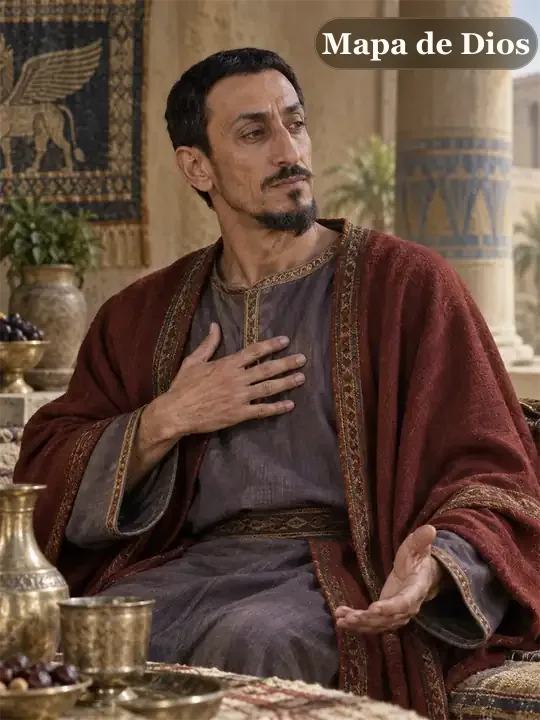
Who was Haman?
- Son of Hammedatha the Agagite. King Ahasuerus placed him above all his officials. Esther 3:1
- He was angry because Mordecai would not bow down before him. So he wanted to destroy all of Mordecai’s people. Esther 3:5-6
- Esther exposed his plan before the king. Haman died on the gallows he had prepared for Mordecai. Esther 7:6, 10
- Occupation
- The highest of King Ahasuerus’s officials Esther 3:1
What the Bible says
Esther 3:1
After these things, king Assuerus advanced Aman, the son of Amadathi, who was of the race of Agag: and he set his throne above all the princes that were with him.
Esther 3:5-6
5Now when Aman had heard this, and had proved by experience that Mardochai did not bend his knee to him, nor worship him, he was exceeding angry. 6And he counted it nothing to lay his hands upon Mardochai alone: for he had heard that he was of the nation of the Jews, and he chose rather to destroy all the nation of the Jews that were in the kingdom of Assuerus.
Esther 7:6, 10
6And Esther said: It is this Aman that is our adversary and most wicked enemy. Aman hearing this was forthwith astonished, not being able to bear the countenance of the king and of the queen. 10So Aman was hanged on the gibbet, which he had prepared for Mardochai: and the king’s wrath ceased.
Douay-Rheims Bible (Challoner revision), public domain.
The path of Haman
- Before Jesus. King Ahasuerus placed Haman above all his officials. He ordered his palace servants to kneel before Haman. Esther 3:1-2
- Before Jesus. Mordecai would not kneel, and Haman was filled with anger against him. Esther 3:2, 5
- With Jesus. Attacking Mordecai was not enough for him. He wanted to destroy all the Jews in the kingdom, Mordecai’s people. Esther 3:6
- With Jesus. He cast the lot, the “pur,” to choose the day. He accused that people before the king and obtained a decree to destroy them. Esther 3:7-13
- With Jesus. Esther invited him to two banquets with the king. Haman boasted to his wife and friends, and had a gallows prepared for Mordecai. Esther 5:4, 11-14
- With Jesus. The king asked his advice on how to honor someone. Haman thought he himself would be the one honored, and he had to honor Mordecai. Esther 6:6-11
- With Jesus. Haman went home sad, with his head covered. His wife and his advisers told him he would not be able to defeat Mordecai. Esther 6:12-13
- Afterward. At the second banquet, Esther told the king that the enemy of her people was Haman. Esther 7:3-6
- Afterward. Haman begged Esther for his own life. The king ordered him hanged on the gallows he had prepared for Mordecai. Esther 7:7-10
- Afterward. Afterward, Esther fell weeping at the king’s feet. She asked him to cancel the letters Haman had written against the Jews. Esther 8:3-5
- Afterward. The book tells that the evil Haman had planned against the Jews turned back on himself. Esther 9:24-25
Words of Haman
“Queen Esther also hath invited no other to the banquet with the king, but me: and with her I am also to dine tomorrow with the king: and whereas I have all these things, I think I have nothing, so long as I see Mardochai the Jew sitting before the king’s gate.” Esther 5:12-13
To his wife and his friends, on returning from the first banquet.
“The man whom the king desireth to honour, ought to be clothed with the king’s apparel, and to be set upon the horse that the king rideth upon, and to have the royal crown upon his head… Thus shall he be honoured, whom the king hath a mind to honour.” Esther 6:7-9
To the king, believing he himself would be the one honored.
What they were like
- Powerful: the king placed him over all the officials. Esther 3:1
- Proud: he boasted of his riches and his many sons. Esther 5:11
- Angry: he could not stand to see Mordecai sitting at the gate. Esther 5:9, 13
Not to be confused with
- Haman was not the king. Ahasuerus was the king of Persia, and Haman was the highest of his officials. Esther 3:1
What people ask
Why was Haman angry with Mordecai?
Because Mordecai would not kneel before him, even though the king had ordered it. Esther 3:2, 5
What is the “pur”?
A Babylonian word that means “lot.” Haman cast lots to choose the day; that is where the name of the feast of Purim comes from. Esther 3:7; Esther 9:26; NAB note on Est 3, 7
What does it mean that he was an Agagite?
A note in the NAB links him to Agag, the king defeated by Saul. Mordecai descended from Kish, the father of Saul. Esther 3:1; Esther 2:5; NAB note on Est 12, 6
How did Haman end up?
The king ordered him hanged on the gallows he himself had prepared for Mordecai. Esther 7:9-10
Why wouldn’t Mordecai kneel before Haman?
Mordecai was a Jew. In his prayer he said he did not do it out of pride: he did not want to give a man the honor that belongs to God. Esther 3:4; Esther 13:12-14
How were Mordecai’s people saved?
Esther pleaded with the king for her people. The king issued another decree that allowed them to defend themselves. Esther 8:3-5, 11
His pride He wanted to destroy a whole people because of his anger at a single man. Esther 3:6 He believed no one deserved more honor than he did. Esther…
The rest of this page (daily life, failings, little-known facts, for you…) is part of the subscription.
See the mapWho Haman is connected to
More people
All the people of the Bible · The Twelve Apostles · Women of the Bible